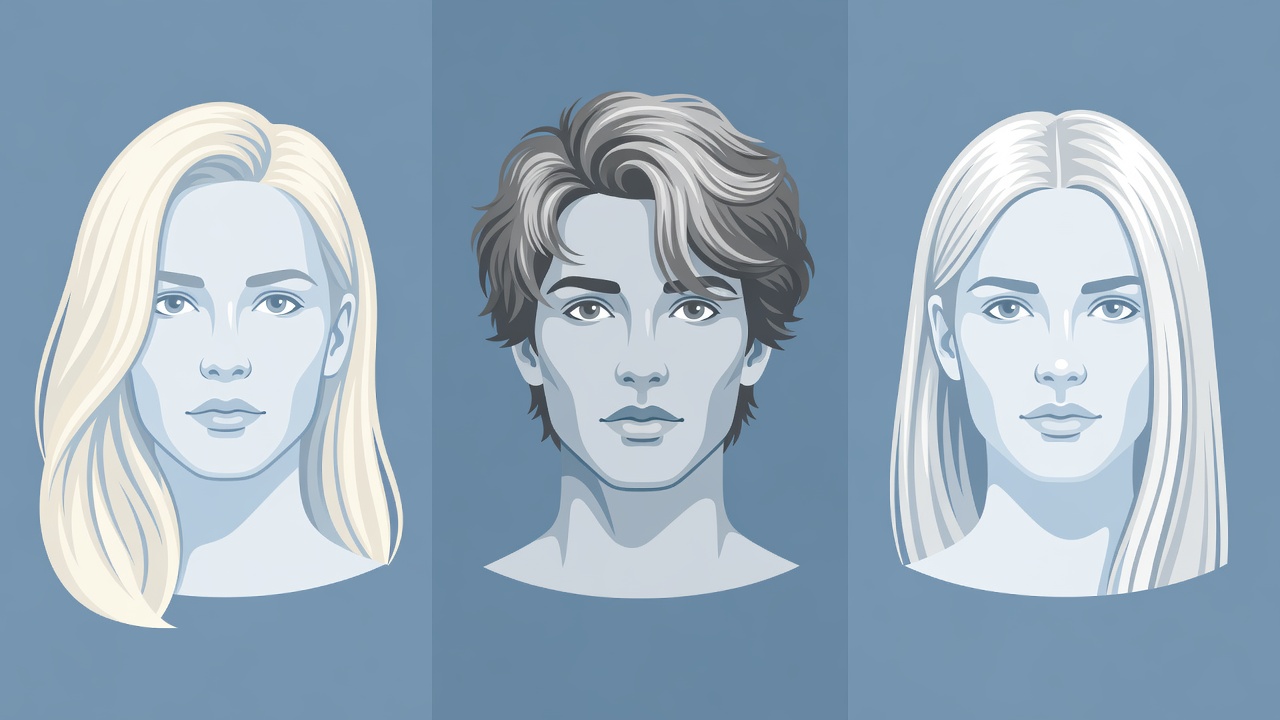
A cool shade is not a personality type, and it is not reserved for one complexion. It describes a colour direction: less visible golden or copper warmth, sometimes with a pearl, ash or smoky finish. The useful question is not whether you are “allowed” to wear it. It is which balance of brightness, depth and contrast feels right beside your features and fits your everyday routine.
Salon shade names are not universal formulas. “Frost,” “pearl” and “ice” may mean different things across colour ranges, and a social-media filter can blur those distinctions further. Use a name as an opening description, then point to the specific qualities you like: a pale hairline, darker roots, translucent-looking ends or a visibly silver cast.
Icy blonde: pale, with restrained warmth
Icy blonde usually suggests a very light blonde with a cool or neutral-cool reflection. It need not look grey. A little softness through the root or interior can keep the result dimensional, especially on waves and layered cuts. If your favourite picture still looks creamy in daylight, say so; “no warmth at all” might lead to a smokier result than you intended.
For many starting colours, this finish requires lightening followed by carefully chosen toner. Toner can adjust the appearance of remaining warmth, but it cannot make an insufficiently light foundation behave like pale blonde. Your colourist may suggest a slightly deeper, softer version if pushing lighter would compromise the fibre.
Silver: a visible tonal statement
Silver is more than blonde without yellow. It often has a discernible grey, pearl or smoky character. Many clean silver finishes depend on a very pale, reasonably even foundation, although the exact requirement depends on the target shade and product system. Uneven porosity can make some sections take pigment more strongly than others.
Artificial silver and naturally grey hair are also different starting points. Natural grey may contain a mixture of white and pigmented strands, with its own texture and staining concerns. Creating a silver look on darker coloured hair can involve substantial work. Ask whether your reference is natural grey, salon colour, a wig or a heavily edited photograph before treating it as a simple target.
Platinum: brightness before a specific tone
Platinum describes exceptional lightness more reliably than one exact reflection. It can lean pearl, neutral or cool. A full platinum transformation generally creates a stronger contrast with darker regrowth than scattered highlights do, so the root plan matters as much as the first reveal. Discuss how a visible root will look at the point you realistically return.
Hair already carrying permanent dark colour may not reach an even pale result safely in a single appointment. Previously lightened lengths may also be too fragile for additional processing. Choosing a lower-contrast blonde, a shorter cut or a phased plan is not a failed transformation. It is a different design decision with more room for the hair you have.
Choose the quality of light you love—not just the coolest name on the swatch chart.
Let depth do some of the work
A shadow root introduces intentional depth near the scalp. Lowlights add darker strands through lighter areas. Both can make a cool finish feel less flat, though neither automatically reduces every kind of maintenance. A root shadow may soften the visual transition as hair grows, while the pale lengths still need thoughtful cleansing, conditioning and occasional tonal attention.
If you enjoy silver but do not want an all-over pale base, ask about selective ribbons or a cool face frame. Consider where you wear your parting and how often you tie your hair up. A colour that looks balanced with the hair down may reveal a different contrast at the temples or underneath when worn up.
Build a reference set that helps
Bring two or three images in different lighting conditions, along with one example you dislike. Describe the difference in ordinary language: “I like the pale ends, but not the dark root,” or “I want a cool blonde, not a grey cast.” Include an unfiltered image of your current hair if you are arranging an initial consultation remotely.
Be equally clear about time, budget and your tolerance for visible regrowth. A colourist can then compare your desired finish with your starting point instead of promising a look in isolation. For more on how the foundation is created, move to the technique guide before deciding which service name to book.